Keynote Speakers for Hire: How to Find, Vet and Book the Right Speaker
Keynote speakers for hire: where to find them, what they cost, how to vet them in 30 minutes and how to book. Free checklist and scorecard inside.
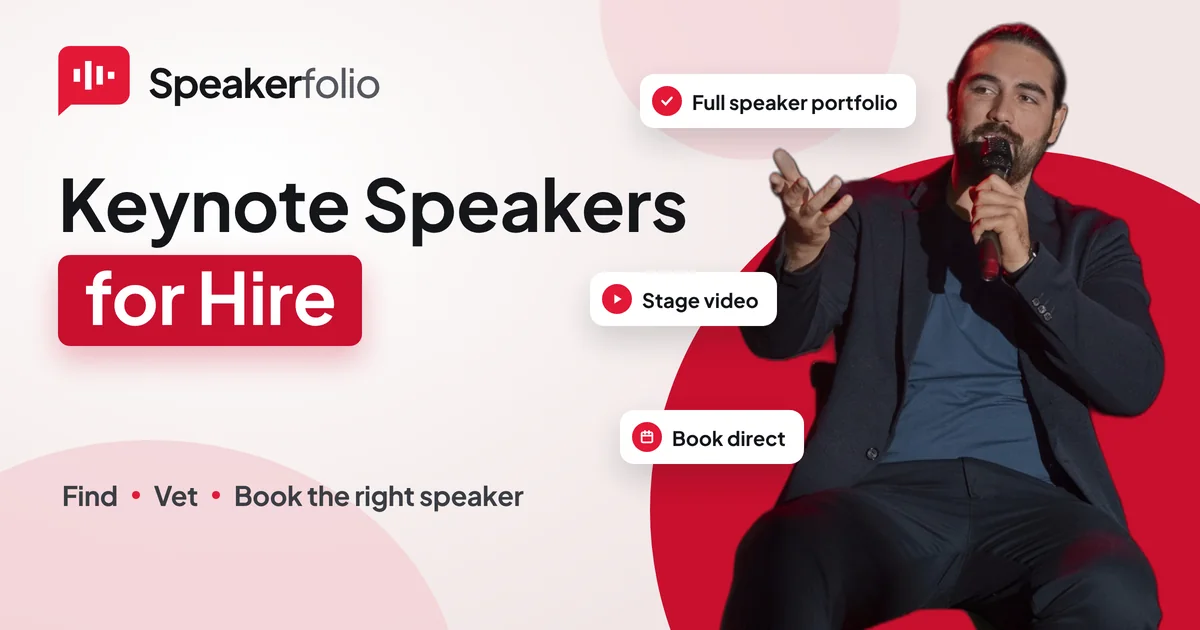
Keynote speakers for hire are professional presenters you pay to open, anchor or close an event with a talk built around your theme and audience. You can find them in three main places: speakers bureaus, online speaker directories such as Speakerfolio, and direct outreach to speakers you already know about. Most professional keynote speakers charge between $5,000 and $30,000 per talk plus travel, and the best ones should be booked six to nine months ahead. To choose well, check four things before anything else: topic fit, a real stage video, testimonials from event organizers and a clear way to send a booking request.
This guide walks you through each step, from building a shortlist to signing the contract, so you can hire with confidence and spend hours, not weeks, doing it.
Key takeaways
- Where to look: speakers bureaus (full service, highest cost), speaker directories (fast, free to search) and direct outreach (cheapest, slowest).
- What it costs: about $1,500 to $5,000 for emerging speakers, $5,000 to $30,000 for established professionals, and $30,000 to $100,000+ for celebrities.
- When to book: six to nine months ahead for most events, nine to twelve months or more for high-demand names.
- How to vet: watch real stage footage, read testimonials from organizers, confirm past events and get a one-sheet before you talk money.
What is a keynote speaker for hire?
A keynote speaker is the featured presenter who sets the tone for an event. The keynote usually runs 30 to 60 minutes, is delivered to the full audience in a general session and ties directly to the event's theme. A keynote speaker "for hire" is simply a speaker who takes paid engagements, either directly or through an agent.
Keynotes are different from other session types, and the difference affects what you should look for and what you should pay.
| Session type | Typical length | Audience | Main goal | What to look for |
|---|---|---|---|---|
| Keynote | 30 to 60 minutes | Whole event | Inspire and frame the theme | Stage presence, storytelling, a memorable message |
| Breakout session | 45 to 90 minutes | A smaller group | Teach a specific skill | Subject expertise, practical takeaways |
| Workshop | 2 hours to a full day | Small, hands-on group | Build capability | Facilitation skills, materials, exercises |
| Panel or moderated talk | 30 to 60 minutes | Whole event or track | Debate and insight | Quick thinking, comfort with questions |
| Virtual keynote | 20 to 45 minutes | Online attendees | Engage a remote audience | Camera presence, good audio and video setup |
Many speakers offer more than one format. A leadership speaker might deliver a 45-minute keynote in the morning and a half-day workshop in the afternoon, which can be better value than booking two different people.
Where to find keynote speakers for hire
There is no single right channel. The best one depends on your budget, timeline and how much of the work you want to do yourself.
| Channel | Best for | Cost to you | Speed | Watch out for |
|---|---|---|---|---|
| Speakers bureau | Large budgets, celebrity or high-demand names | Commission is built into the fee | Fast once briefed | Many bureaus focus on speakers above $10,000 |
| Speaker directory | Browsing many speakers quickly by topic | Usually free to search | Fast | Profile quality varies between directories |
| Direct outreach | Speakers you already know or have seen | No middleman | Slow | You handle contracts and logistics yourself |
| Referrals from peers | Proven speakers for similar audiences | No middleman | Medium | A smaller pool to choose from |
| Associations and industry events | Niche expertise for specialist audiences | Varies | Medium | Experts are not always polished presenters |
Speakers bureaus
A speakers bureau is an agency that represents many speakers and matches them to events. Bureaus shortlist speakers, negotiate fees and handle contracts, which saves you time. In return they take a commission from the speaker's fee. In an interview with SpeakerFlow, a bureau owner put it plainly: "Most bureaus are going to be charging a 25% commission" (SpeakerFlow). Rates of 20% to 30% are common across the industry.
Because a bureau earns a percentage, some will not take bookings under about $10,000. If your budget is smaller, a directory or direct outreach usually works better.
Speaker directories
A speaker directory lets you search many speakers in one place, filter by topic, format and location, then contact the ones you like. The big advantage is speed: you can compare a dozen speakers in an afternoon instead of chasing a dozen separate websites.
The weakness is inconsistency. On many directories, one speaker has a full profile with video and testimonials while the next has a headshot and two lines of text. That is why the structure of a directory matters as much as its size. On Speakerfolio, every speaker profile follows the same layout, with topics, formats, a stage video, organizer testimonials, past events and a booking form, so you can compare speakers like for like. Planners search for free and contact speakers directly, with no booking fee.
Direct outreach
If you already know who you want, contact the speaker through their website or LinkedIn. You avoid commissions, but you take on the negotiation, contract and travel planning yourself. Direct booking works best for experienced planners or for speakers who manage their own bookings.
How much does it cost to hire a keynote speaker?
Keynote fees vary widely, but most speakers fall into recognisable tiers. The ranges below come from the National Speakers Bureau's published fee guide (NSB).
| Speaker tier | Typical fee per keynote | Who they are |
|---|---|---|
| Entry level | $1,500 to $5,000 | Emerging speakers, subject experts and local professionals |
| Mid-range | $5,000 to $15,000 | Experienced speakers with a track record and strong reviews |
| Professional | $15,000 to $30,000 | Established names, published authors and in-demand industry voices |
| Celebrity | $30,000 to $100,000+ | Famous athletes, executives, authors and public figures |
What affects a speaker's fee
- Expertise and demand. Rare knowledge on a trending topic costs more.
- Experience. Seasoned speakers with proven results charge more than newcomers.
- Event type. Corporate events often pay more than non-profit or education events.
- Travel and timing. Long-haul and international travel usually raises the fee.
- Format and length. Adding a workshop, a book signing or a second session increases the total.
Costs beyond the speaking fee
Budget for these separately, because they are rarely included in the quoted fee:
- Travel: flights, ground transport and hotel, usually paid by the client.
- Meals and incidentals during the stay.
- Audio-visual requirements listed in the speaker's tech rider.
- Books or materials for attendees, if you want them.
- Recording rights if you plan to share the talk after the event.
A good rule: add 10% to 20% on top of the speaking fee for travel and extras when you set your budget.
How to get more value from your budget
- Book early. Speakers have more flexibility on fees when their calendar is open.
- Combine sessions. Ask for a keynote plus a breakout or workshop on the same day.
- Go virtual. Remote keynotes remove travel costs and are often priced lower.
- Consider rising speakers. Many mid-range speakers deliver as well as famous names for a fraction of the fee, especially on specialist topics.
How to vet a keynote speaker in 30 minutes
A polished website does not prove a speaker can hold a room. Use this checklist to judge real ability quickly. If a speaker's profile has everything below in one place, vetting takes minutes rather than hours.
- Topic fit. Read their talk titles and descriptions. Do they solve the exact challenge your audience faces? A strong speaker explains who each talk is for and what attendees will take away.
- Real stage video. Watch at least five minutes of genuine footage from a live event, not just a highlight montage. Look at pace, energy, humour and how the audience reacts.
- Organizer testimonials. Quotes from event planners and conference leads matter more than praise from attendees. Look for specifics: did the speaker customise the talk, stay on time and work well with the team?
- Past events. Check the organizations and audiences they have spoken to. Similar industries and audience sizes are a good sign.
- A one-sheet and bio. Professional speakers have a one-page summary with topics, bio, photos and formats ready to send. It shows they are easy to work with.
- Booking clarity. Is there a clear way to check availability and send a request? A speaker who is hard to reach before the booking will be hard to reach after it.
- A short fit call. Before you sign, spend 15 to 20 minutes on a call. Ask how they would tailor the talk to your audience and listen for questions about your event.
Red flags to watch for
- No real video, or only a 30-second reel made of stock footage.
- Testimonials with no names, roles or organizations.
- Vague topics such as "motivation" with no clear outcome.
- Slow or unclear replies during the enquiry stage.
- Pressure to sign quickly without a written agreement.
The speaker booking process, step by step
Here is a simple process that works for most corporate events, conferences and association meetings.
- Define the goal (9 to 12 months out). Write one sentence on what the audience should think, feel or do after the keynote.
- Set the budget. Include the fee, travel and extras, and agree on a maximum.
- Build a longlist (6 to 9 months out). Use a directory, a bureau or referrals to find eight to ten candidates.
- Shortlist three speakers. Apply the vetting checklist above and compare them side by side.
- Check availability and fees. Send a short brief with your date, location, audience size and format.
- Hold a fit call. Speak to your top choice and confirm they can tailor the talk.
- Sign the contract. Agree on the fee, deposit, travel, cancellation terms, recording rights and tech needs in writing.
- Prepare together. Share audience insights, the agenda and your event theme. Schedule a tech check before the day.
How far ahead should you start? Leading Authorities, a major speakers bureau, recommends booking most keynote speakers "6 to 9 months" before the event and starting nine to twelve months or more ahead for high-demand names, because calendars fill fast during the spring and autumn conference seasons (Leading Authorities). Booking with less than three months' notice is possible, but you will need a few backup options ready.
Questions to ask before you book a keynote speaker
Send these questions before the contract stage. The answers reveal how professional and flexible a speaker is.
- How will you tailor this talk to our industry and audience?
- Can you share a full, unedited recording of a recent keynote?
- Who is a past client we could speak to as a reference?
- What is included in your fee, and what is billed separately?
- What are your audio-visual and stage requirements?
- Do you offer a workshop, breakout or virtual option as well?
- What is your cancellation and rescheduling policy?
- Can we record the session and share it with attendees afterwards?
How to compare keynote speakers side by side
When you have three finalists, score each one on the same criteria. A simple scorecard removes guesswork and makes the decision easy to explain to your committee or leadership team.
| Criteria | Weight | Speaker A | Speaker B | Speaker C |
|---|---|---|---|---|
| Topic fit with our theme | 30% | |||
| Stage presence on video | 25% | |||
| Organizer testimonials | 15% | |||
| Relevant past events | 10% | |||
| Fee within budget | 10% | |||
| Ease of communication | 10% |
Score each line from one to five, multiply by the weight and add up the totals. The highest score usually wins, but trust your fit call if two speakers are close.
Why standardized speaker portfolios save planners hours
Most of the time spent hiring a keynote speaker goes on hunting for basic information. One speaker keeps their topics on a website, their video on YouTube, their testimonials in a PDF and their fee in an email. Another has a beautiful site with no video at all. Comparing them means opening dozens of tabs and filling a spreadsheet by hand.
Standardized speaker portfolios fix this. When every speaker presents the same information in the same order, you can compare them in minutes. Look for directories and speaker websites that show:
- Who the speaker helps and the outcome of each talk.
- Talk titles with formats and lengths.
- A real stage video you can watch on the page.
- Organizer testimonials with names and organizations.
- Past events and audience types.
- A booking form that goes straight to the speaker.
This is the idea behind Speakerfolio. Every speaker in the directory has a full website and a profile built on the same structure, so you can filter by topic and format, watch the video, read the proof and send a request in one place. For a closer look at what a strong speaker website includes, read what event planners look for on a leadership speaker's website.
Frequently asked questions
How do I find keynote speakers for hire?
You can find keynote speakers for hire through speakers bureaus, online speaker directories, referrals from other planners and direct outreach on LinkedIn or speaker websites. Directories such as Speakerfolio let you filter speakers by topic and format and contact them directly for free.
How much does it cost to hire a keynote speaker?
Most professional keynote speakers charge between $5,000 and $30,000 per talk. Emerging speakers often charge $1,500 to $5,000, while celebrities can charge $30,000 to $100,000 or more. Travel, accommodation and audio-visual needs are usually paid separately.
How far in advance should I book a keynote speaker?
Book most keynote speakers six to nine months before your event. For high-demand or celebrity speakers, start nine to twelve months or more ahead, especially for spring and autumn conference dates.
Is it cheaper to book a speaker directly or through a bureau?
Booking directly is often cheaper because there is no agency commission, which is typically 20% to 30% of the fee. A bureau saves you time on shortlisting, negotiation and contracts, so it can be worth the cost for large events or famous speakers.
What should I look for when hiring a keynote speaker?
Look for a clear fit between the speaker's topics and your audience, real video of them speaking on stage, testimonials from event organizers, relevant past events and a professional one-sheet. A short call before booking helps you confirm they can tailor the talk.
What is the difference between a keynote speaker and a motivational speaker?
A keynote speaker is defined by their role at the event: the featured talk that sets the theme. A motivational speaker is defined by their style and subject: inspiration and personal growth. Many motivational speakers deliver keynotes, but a keynote can also focus on leadership, technology, sales or industry trends.
Can I hire a keynote speaker for a virtual event?
Yes. Many keynote speakers offer virtual keynotes, often at a lower fee because there is no travel. Ask for a recording of a previous virtual talk and confirm their camera, microphone and lighting setup before you book.
Hire your next keynote speaker with confidence
Finding the right keynote speakers for hire comes down to a clear goal, a realistic budget and a simple vetting process. Start early, judge speakers on real video and organizer testimonials, and compare your finalists on the same criteria. The more consistent the information you start with, the faster the decision becomes.
Ready to start your shortlist? Browse the Speakerfolio speaker directory to compare speakers by topic and format, watch their talks and send a booking request directly.

Saleh is a UI/UX and web designer with more than five years of experience and the founder of Speakerfolio, where he builds websites that help speakers get booked. He specialises in conversion-focused design and on-page SEO.
Connect on LinkedIn