How Organizations Select Business Keynote Speakers: The 7-Stage Process
How organizations select business keynote speakers: who decides, the 7-stage process, the criteria companies score, red flags, and how speakers get chosen.
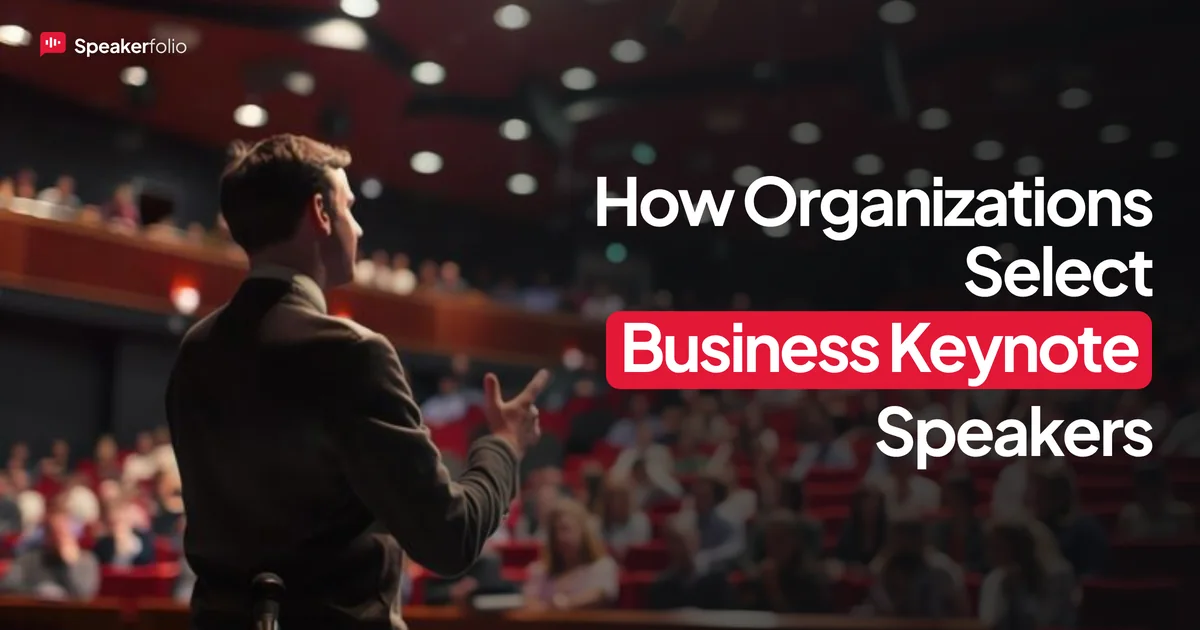
Organizations select business keynote speakers by matching a speaker's topic and style to the event's goal, then checking proof: stage video, testimonials from similar companies, and a short call to test fit. The decision usually involves an event lead, an executive sponsor and often HR, marketing or procurement, and it moves through stages from a brief to a shortlist to a contract. Speakers who make that process easy get chosen more often. Planners can compare business speakers side by side in the Speakerfolio speaker directory.
Key takeaways
- The event goal comes first. Companies pick the speaker who best serves the outcome they need, not the most famous name.
- Several people decide. An event lead shortlists, an executive approves, and procurement or legal often signs off.
- Proof wins: stage video, testimonials from similar companies, and clear talk outcomes.
- Speakers who are easy to evaluate (clear website, fast replies, simple pricing) move to the top of the shortlist.
Who decides which business keynote speaker gets booked
At most companies, choosing a keynote speaker isn't one person's call. These are the people usually involved:
| Role | What they care about |
|---|---|
| Event manager or planner | Fit with the agenda, logistics, reliability, budget |
| Executive sponsor (CEO, CHRO, sales leader) | Whether the message supports the company's strategy |
| HR or learning and development | Whether employees will learn and apply something |
| Marketing or communications | Brand fit, tone and how the talk will look on social media |
| Procurement or legal | Contract terms, insurance, invoicing and approved suppliers |
| Event agency or speakers bureau (if used) | Finding options that meet the brief and budget |
A speaker might impress the event manager and still lose because the executive sponsor wants a different message. The best speakers make it easy for the event lead to "sell" them internally.
The 7-stage selection process
Stage 1: Define the event goal
It starts with a question: what should change because of this event? Typical answers for business events:
- Align teams behind a new strategy
- Energise a sales force before a big year
- Help leaders through a merger, restructure or new technology
- Build culture and connection after a hard year
- Position the company as a thought leader at a client or industry event
The goal shapes everything else, from topic to tone to budget.
Stage 2: Write the speaker brief
The event lead writes a short brief, often one page, covering:
- Audience: who, how many, seniority and industry
- Theme and goal of the event
- Format: opening keynote, closing keynote, fireside chat, virtual
- Length, date and location
- Budget range
- Must-haves, such as industry experience or a specific topic
Stage 3: Build a longlist
Next, the team gathers 10 to 20 possible names. Business event planners usually find them through:
- Speaker directories, where they can filter by topic and format
- Speakers bureaus and event agencies
- Recommendations from colleagues and other companies
- Speakers they've seen at conferences
- Google, LinkedIn and AI assistants
- Authors of books the leadership team admires
At this stage, the speaker's online presence matters most. If the planner can't quickly see the topic, a video and a way to book, the speaker often doesn't make the next cut.
Stage 4: Shortlist with clear criteria
The team narrows the list to three to five speakers using criteria like these:
| Criteria | What planners look for |
|---|---|
| Topic fit | A talk that matches the event goal, not a generic one |
| Business credibility | Real experience in leadership, sales, operations or the industry |
| Stage presence | Video of the speaker holding a large room |
| Relevant clients | Past talks for similar companies, sizes or industries |
| Tailoring | Willingness to adapt examples and language to the company |
| Takeaways | Practical ideas the audience can use the next day |
| Budget | Fee, travel and extras within the approved range |
| Availability | Free on the date, including travel time |
Many teams score each speaker from 1 to 5 on these points to compare them fairly and explain the choice to leadership.
Stage 5: Check proof and references
For the shortlist, planners dig deeper:
- Watch full talks, not only a highlight reel
- Read testimonials and look for names and companies they recognise
- Call or message a past client for a reference
- Look at recent articles, podcasts or books
- Check the speaker's social media for tone and anything off-brand
Stage 6: Hold a fit call
Before deciding, many organizations have a 20 to 30 minute call with their top one or two speakers. They're testing:
- How well the speaker listens and asks about the audience
- How they'd tailor the talk to the company's situation
- Whether their energy and values fit the culture
- How easy they'll be to work with on logistics
A speaker who arrives with good questions and a few ideas for tailoring often wins at this stage.
Stage 7: Approve, contract and prepare
Once the team agrees, the executive sponsor approves the choice and procurement handles the contract. The agreement usually covers the fee and deposit, travel, recording rights, cancellation terms and any extra sessions. Then comes a prep call to plan the details.
What business organizations value most in a keynote speaker
When companies explain why they picked one speaker over another, the reasons tend to be the same:
- The talk fit our goal. The message clearly supported what leadership wanted to achieve.
- They understood business. The speaker had credibility with managers and executives, not only inspiration.
- We could see them in action. Strong video removed the risk.
- Others like us trusted them. Testimonials from similar companies made the decision easier to defend.
- They were easy to work with. Fast, clear replies and simple terms.
Red flags that get speakers dropped
- A website or profile that hasn't been updated in years
- No full-length video, only short clips
- Generic talks that can't be tailored
- Slow replies or unclear pricing
- Testimonials with no names or companies
- Content online that clashes with the company's values
- Pushing to sell products or coaching during the keynote
How business keynote speakers can get selected more often
If you're a speaker, use the selection process to your advantage:
- Lead with outcomes: describe each talk by what changes for the audience, not just the topic.
- Show business proof: client logos, case studies and testimonials from managers and executives.
- Make video easy to find: a short reel and at least one full talk.
- Publish a clear booking path: formats, rough fee range and a simple enquiry form.
- Reply fast and ask smart questions: it signals how easy you'll be to work with.
- Be findable: a speaker website and directory profile so you appear when planners search.
How Speakerfolio helps organizations and speakers
For organizations, the Speakerfolio speaker directory lists business speakers with their topics, talks, formats and booking details in one consistent layout, so your team can build a longlist and compare speakers quickly. Browsing and contacting speakers is free. For a step-by-step planning guide, see how to find a keynote speaker, and for budgets, our guide to keynote speakers for hire.
For business keynote speakers, Speakerfolio writes and builds a free speaker website from your LinkedIn profile, with your talks, video, client proof and a booking form, on yourname.speakerfolio.com, and lists you in the directory. Premium moves your site to your own domain with a custom design and full control for $100 a year, hosting and updates included.
Frequently asked questions
How do companies choose a keynote speaker?
They start with the event goal and audience, write a brief, build a longlist from directories, bureaus and referrals, shortlist three to five speakers against clear criteria, check video and references, hold a fit call and then contract the best match.
Who decides on the keynote speaker for a corporate event?
Usually the event manager shortlists, an executive sponsor approves, and HR, marketing, procurement or legal may also be involved depending on the company.
What do organizations look for in a business keynote speaker?
Topic fit with the event goal, business credibility, stage presence on video, experience with similar companies, willingness to tailor the talk, practical takeaways, budget fit and availability.
How far in advance do companies book keynote speakers?
Most book three to nine months ahead. Large conferences and high-demand speakers are often booked nine to twelve months in advance.
How much do businesses pay for keynote speakers?
Fees range widely: emerging speakers often charge $1,500 to $5,000, established professionals $5,000 to $30,000, and celebrities $30,000 or more, plus travel.
Why do companies hold a call before booking a speaker?
To check how the speaker listens, how they'd tailor the talk, whether they fit the culture and how easy they'll be to work with.
How can a speaker get chosen by more organizations?
Describe talks by their outcomes, show business proof and video, make booking simple, reply quickly and have a speaker website and directory profile so planners can find and evaluate you.
Make the right choice, or be the right choice
Organizations choose business keynote speakers the same way they make other important decisions: clear goals, clear criteria and proof. Planners can start building a shortlist in the Speakerfolio speaker directory. Speakers can get their free speaker website built and listed, so they're easy to evaluate when the brief arrives.

Saleh is a UI/UX and web designer with more than five years of experience and the founder of Speakerfolio, where he builds websites that help speakers get booked. He specialises in conversion-focused design and on-page SEO.
Connect on LinkedInRelated articles
All articles