How to Become a Motivational Speaker: 9 Steps From Story to Stage
How to become a motivational speaker: find your story, choose a niche, build a signature talk, get your first bookings, set fees and grow your income.
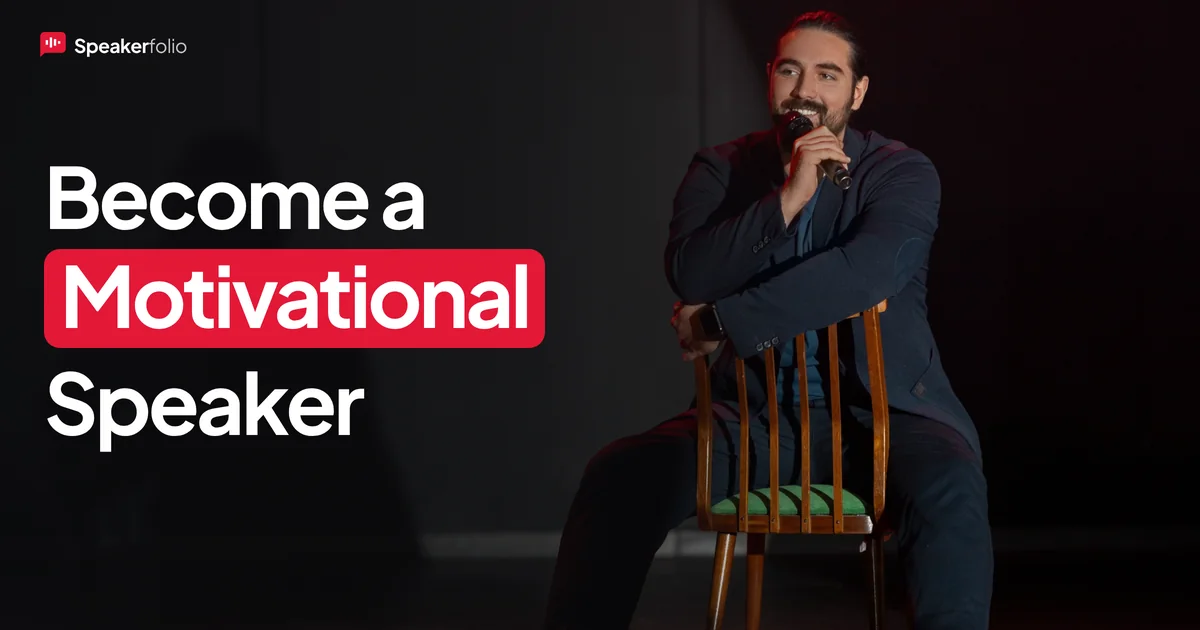
To become a motivational speaker, start with a real story of change you've lived, turn it into one clear message, and choose the audience that most needs to hear it. Build a signature talk around that message, practise it at schools, community groups and company events, and collect video and testimonials as you go. Then make yourself easy to book with a speaker website and a profile in the Speakerfolio speaker directory, where event planners search for speakers.
Key takeaways
- Your story is the foundation, but the talk has to be about the audience's change, not only yours.
- Pick a niche: students, sales teams, athletes, nonprofits or faith groups all need different talks.
- Start small and speak often. Video and testimonials from early talks are what get you bigger bookings.
- Motivational speakers earn from more than keynotes: workshops, coaching, books and online programmes add income.
What does a motivational speaker do?
A motivational speaker gives talks that help people see what's possible and take action. Their talks usually mix a personal story with practical lessons, and they're booked to lift energy, change mindsets or rally a group behind a goal.
Motivational speakers speak at:
- Company kick-offs, sales conferences and team offsites
- Schools, colleges and graduation events
- Nonprofit galas and fundraisers
- Sports teams and athletic programmes
- Churches and faith-based events
- Community events and youth programmes
Many motivational speakers are booked as the keynote speaker at an event. If you want to understand the keynote role more broadly, our guide on what a keynote speaker does explains it.
What makes a great motivational speaker
The best motivational speakers share a few things:
| Quality | What it looks like on stage |
|---|---|
| A real story | They've lived what they talk about, so the audience trusts them |
| A clear message | The audience can repeat the main idea after the talk |
| Practical takeaways | People leave with something to do, not just a good feeling |
| Energy that fits the room | They can lift a tired room or speak quietly to a small one |
| Humility | The story serves the audience; the speaker isn't the hero of every moment |
How to become a motivational speaker: 9 steps
Step 1: Find your story
Every motivational talk starts with a story of change. It might be overcoming an illness, rebuilding after failure, leaving a career, leading a team through a crisis, growing up with very little or achieving something people said you couldn't.
Write down the key moments: where you started, what went wrong, the turning point, what you did and where you are now. You don't need a dramatic story. You need an honest one that others can see themselves in.
Step 2: Turn your story into a message
A story alone isn't a talk. Ask: what did this teach me that would help someone else? That lesson is your message.
Try finishing this sentence: "After my talk, people will believe they can... because..." For example: "After my talk, young people will believe they can recover from a bad start, because I'll show them the three choices that changed my life."
Step 3: Choose your audience
Motivational speaking is a crowded field, and a clear niche helps planners choose you. Pick one main audience to start with:
| Audience | What they often need |
|---|---|
| Students and young people | Belief, direction, resilience, avoiding risky choices |
| Sales teams | Drive, handling rejection, hitting targets |
| Corporate teams | Resilience, change, teamwork, wellbeing |
| Athletes and sports teams | Mental toughness, focus, comeback stories |
| Nonprofits and fundraisers | Purpose, hope, inspiring donors and volunteers |
| Faith communities | Purpose, healing, service, family |
You can speak to other audiences later, but one clear focus makes your marketing much easier.
Step 4: Build a signature talk
Your signature talk is the one you'll give again and again, adapted for each audience. A simple structure works for most motivational talks:
- Opening moment: drop the audience into a key scene from your story
- The struggle: what was at stake and why it was hard
- The turning point: the moment or choice that changed things
- The lessons: three practical ideas the audience can apply
- The call to action: what you want them to do next
Keep the focus on the audience. A good test: for every story about you, there should be a clear "and here's what that means for you."
Step 5: Practise on smaller stages
Start where the stakes are low and the audience is real:
- Local schools and youth groups
- Rotary clubs, chambers of commerce and community groups
- Churches and faith groups
- Your own workplace or industry association
- Online events, webinars and podcasts
- Toastmasters or another speaking club
Speak for free at first if it gets you in front of the right people. Ask every organiser if you can record the talk.
Step 6: Record your talks and collect testimonials
Planners want to see you speak before they book you. Record every talk you can, even on a phone, and cut your best moments into a two-minute speaker reel.
After each event, ask the organiser for a short testimonial with their name, role and organisation. Quotes about what changed for the audience are the most convincing.
Step 7: Create your speaker materials
Before you start pitching, have these ready:
- A short and a long speaker bio
- Professional photos, including one of you on stage
- Your signature talk title and description
- Your speaker reel
- Testimonials
- A one-page speaker sheet with all of the above
Step 8: Get a motivational speaker website
When planners hear your name, they look you up. They also ask AI assistants for motivational speakers on topics like resilience or leadership. Without a website, they have very little to judge you by.
Your website should show your story, your talks, your reel, testimonials, the audiences you speak to and a booking form. Our checklist on what a motivational speaker website needs covers each section.
Step 9: Start pitching and set your fees
With your talk, video, testimonials and website ready, start contacting events in your niche. Find the person who books speakers, send a short message about why your talk fits their audience and include a link to your website.
As your experience grows, set your fees:
| Speaker level | Typical fee per talk |
|---|---|
| New speaker | Free to $1,500 |
| Emerging speaker | $1,500 to $5,000 |
| Established speaker | $5,000 to $30,000 |
| Well-known name or bestselling author | $30,000+ |
Many motivational speakers charge less for schools and nonprofits and more for corporate events.
How motivational speakers make money
Speaking fees are only one part. Many motivational speakers also earn from:
- Workshops and training that go deeper than a keynote
- Coaching for individuals or small groups
- Books, often sold at events
- Online courses and programmes
- Virtual talks for remote teams and online events
- Sponsorships and partnerships with brands that share their message
Offering more than one format also makes it easier for organisers to book you, especially when budgets are tight.
Common mistakes new motivational speakers make
- Telling their story without turning it into lessons for the audience
- Trying to speak to everyone instead of choosing a niche
- Relying on emotion alone, with no practical takeaways
- Not recording talks, so there's no video when planners ask
- Waiting until everything is perfect before speaking anywhere
- Having only a social media page instead of a proper website
How Speakerfolio helps new motivational speakers
Speakerfolio builds websites for speakers, trainers and coaches. You send your LinkedIn profile, and we write and build a free one-page speaker website for you, with your story, talks, video, testimonials and a booking form. It goes live on yourname.speakerfolio.com, usually within two working days.
You're also listed in the Speakerfolio speaker directory, where planners search for speakers by topic and format. Our Ignite template is designed for motivational speakers, with a bold, high-energy look. When you want your own domain, a custom design and full control, Premium is $100 a year with hosting and updates included.
Frequently asked questions
How do I become a motivational speaker with no experience?
Start with your own story of change, turn it into one clear message and practise at schools, community groups, clubs and online events. Record your talks, collect testimonials and build a speaker website so organisers can find and book you.
Do you need a degree to be a motivational speaker?
No. Motivational speakers are booked for their story, message and ability to connect with an audience, not for a specific qualification.
How much do motivational speakers make?
New motivational speakers often start free or under $1,500 per talk. Emerging speakers usually charge $1,500 to $5,000, and established speakers $5,000 to $30,000 or more. Many also earn from workshops, coaching and books.
What should a motivational speech include?
A personal story, a clear message, practical lessons the audience can use and a call to action. The audience should leave knowing what to do next, not just feeling inspired.
How do motivational speakers get booked?
Through speaker websites, speaker directories, referrals from past organisers, speakers bureaus and direct outreach to events in their niche. Video and testimonials are usually what convince a planner to book.
What is the difference between a motivational speaker and a keynote speaker?
A motivational speaker is defined by the style and goal of their talks: inspiring people to act. A keynote speaker is defined by their role at an event: giving the main talk. Many motivational speakers are booked as keynote speakers.
How long does it take to become a motivational speaker?
It depends on how often you speak and how clear your niche is. Many speakers get their first paid booking after a series of free or low-fee talks that give them video, testimonials and referrals.
Start sharing your story
Becoming a motivational speaker starts with an honest story, one clear message and the courage to share it on small stages first. Record everything, collect testimonials and make yourself easy to find. Get your free speaker website built by Speakerfolio, or see the motivational speaker website templates.

Saleh is a UI/UX and web designer with more than five years of experience and the founder of Speakerfolio, where he builds websites that help speakers get booked. He specialises in conversion-focused design and on-page SEO.
Connect on LinkedInRelated articles
All articles