What Does a Keynote Speaker Do? Before, During and After the Event
What does a keynote speaker do? See how keynote speakers prepare, what they do on the day and after the event, the types of keynotes and what planners expect.
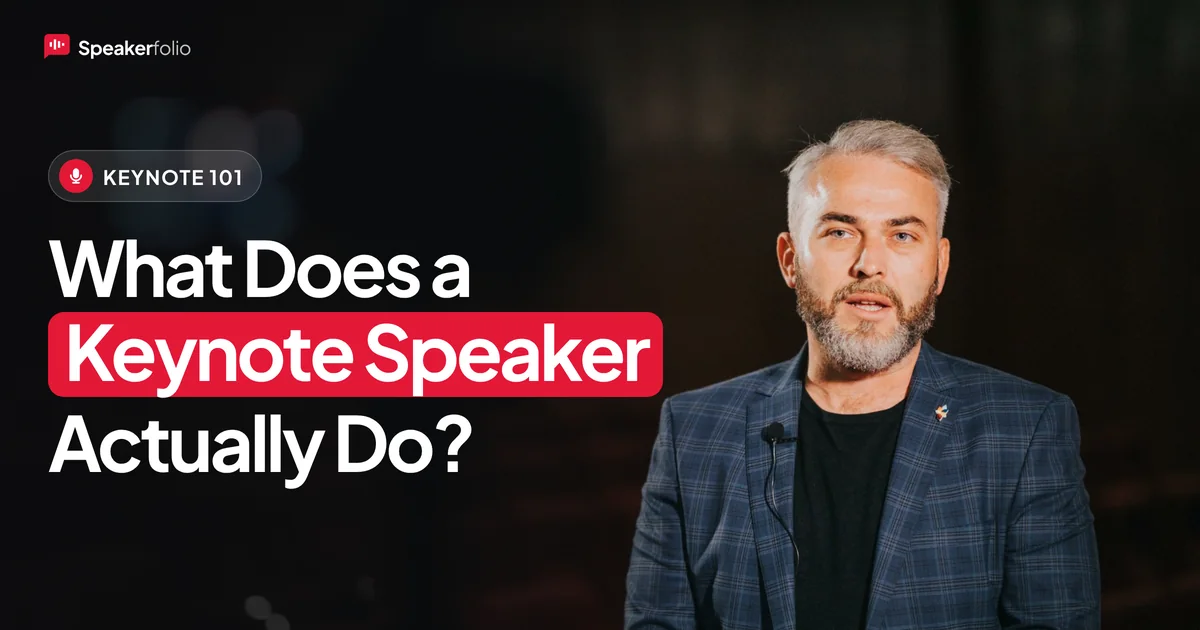
A keynote speaker gives the main talk at an event and sets the theme for everything that follows. The talk itself usually lasts 30 to 60 minutes, but most of the work happens around it: learning about the audience, tailoring the stories, checking the stage, then answering questions and following up afterwards. Event planners book keynote speakers to inspire, teach or bring a room together around one idea. You can see what working keynote speakers offer, and book one directly, in the Speakerfolio speaker directory.
Key takeaways
- A keynote speaker's main job is to open or close an event with a talk that frames its theme.
- Preparation takes far longer than the talk: briefing calls, audience research, tailoring and rehearsal.
- On the day, keynote speakers often do more than speak: Q&A, panels, book signings and meeting leaders.
- Good keynote speakers follow up, sharing resources with attendees and checking in with the organiser.
What does a keynote speaker do, in short?
A keynote speaker delivers the headline talk at a conference, company meeting, summit or awards night. Their talk is the moment the whole audience is in one room, so it has to work for everyone: it sets the mood, introduces the theme and gives people something to talk about for the rest of the event.
To do that, a keynote speaker:
- Learns what the organiser wants the audience to think, feel or do
- Shapes their signature talk around that audience and theme
- Delivers the talk with stories, ideas and practical takeaways
- Stays involved after the talk through Q&A, extra sessions and follow-up
If you are wondering how people get into this work, our guide on how to become a keynote speaker covers the steps.
Before the event: what a keynote speaker does to prepare
Most of a keynote speaker's work happens weeks before they walk on stage.
The briefing call
Once booked, the speaker has a call with the organiser, usually four to six weeks before the event. They ask about:
- Who is in the audience: job roles, seniority, industry and size
- The event theme and the agenda around the keynote
- What has happened in the organisation or industry lately, such as a merger, a new strategy or a hard year
- What success looks like after the talk
- Any topics, words or examples to avoid
Researching and tailoring
Good keynote speakers don't give the same talk word for word everywhere. They keep the structure of their signature talk and change the examples, stories and language to fit the room. For a sales conference they might use sales examples; for a hospital leadership day, healthcare ones. Some speakers interview a few attendees in advance so they can mention real challenges from the stage.
Logistics
The speaker or their team confirms:
- Talk length, start time and where it sits in the agenda
- Stage setup, microphone type (handheld, headset or lapel) and screen size
- Slides, video and any props
- Travel, accommodation and arrival time
- Whether the session will be recorded or streamed
Helping promote the event
Many organisers ask keynote speakers to share the event with their own audience. That can mean a social post, a short video invitation or an interview for the event newsletter.
On the day: what a keynote speaker does at the event
Tech check and rehearsal
A keynote speaker usually arrives early to walk the stage, test the microphone, check the slides on the big screen and agree cues with the event's technical team.
Delivering the keynote
This is the part everyone sees. A strong keynote usually:
- Opens with a story or moment that pulls the room in
- Names a problem the audience recognises
- Offers one clear idea, framework or way of thinking
- Backs it up with stories, examples and results
- Ends with something the audience can use or remember
Q&A and extra sessions
Many keynotes end with 10 to 15 minutes of questions. Depending on the booking, the speaker may also:
- Join a panel later in the day
- Run a smaller breakout session or workshop
- Sign and sell books
- Meet sponsors, VIPs or the leadership team
- Give interviews to the event's media team
A sample day for a keynote speaker
| Time | What happens |
|---|---|
| 7:30 | Arrive at the venue, meet the event manager |
| 7:45 | Sound check, microphone fitting and slide check on stage |
| 8:30 | Breakfast with the organisers and leadership team |
| 9:15 | Opening keynote (45 minutes) |
| 10:00 | Q&A with the audience (15 minutes) |
| 10:30 | Book signing and conversations with attendees |
| 13:30 | Join an afternoon panel |
| 15:00 | Leave for the airport |
After the event: what a keynote speaker does next
The work doesn't end when the applause does. Good keynote speakers:
- Send resources promised from the stage, such as slides, a checklist or a workbook
- Check in with the organiser to hear what landed and what attendees said
- Ask for a testimonial while the event is still fresh
- Share the event on social media and thank the organisers publicly
- Offer follow-up like workshops or coaching if the organisation wants to go deeper
Types of keynotes and what each one does
| Type of keynote | When it happens | What it does |
|---|---|---|
| Opening keynote | Start of the event | Sets the theme and energy for the day |
| Closing keynote | End of the event | Pulls ideas together and sends people off with a clear message |
| Lunch or after-dinner keynote | Middle or evening | Re-energises the room, often with more humour and story |
| Corporate kick-off keynote | Start of a year or quarter | Aligns teams behind a new strategy or goal |
| Awards night keynote | During a celebration | Inspires and honours achievement |
| Virtual keynote | Online event or webinar | Delivers the same role on camera, with more interaction to hold attention |
What event organisers expect from a keynote speaker
When planners book a keynote speaker, they expect more than a good talk. They want someone who:
- Understands their audience and makes the talk feel written for them
- Arrives on time, prepared and easy to work with
- Sticks to the agreed length
- Sets the right tone for the event and the organisation
- Gives the audience ideas they can actually use
- Responds quickly before and after the event
If you are a planner looking for someone who fits that list, our guide on how to find a keynote speaker walks through the process step by step.
How keynote speakers get booked
Before a planner books a keynote speaker, they look them up. They search the speaker's name, ask AI assistants for speakers on their topic and browse speaker directories. What they want to find is simple: the speaker's topics, a stage video, testimonials from other organisers and a way to check availability.
That's why most working keynote speakers have a speaker website and a profile in a speaker directory. Without them, planners have very little to go on.
How Speakerfolio helps keynote speakers and planners
For event planners, the Speakerfolio speaker directory lists speakers with their topics, talks and formats in one consistent layout, so you can compare them quickly and send a booking request straight to the speaker. Searching is always free.
For keynote speakers, Speakerfolio writes and builds a free one-page speaker website from your LinkedIn profile, with your talks, video, testimonials and a booking form. It goes live on yourname.speakerfolio.com, usually within two working days, and you are listed in the directory. When you want your own domain, a custom design and full control, Premium is $100 a year with hosting and updates included.
Frequently asked questions
What does a keynote speaker do?
A keynote speaker gives the main talk at an event, usually at the start or end. They set the theme, prepare by learning about the audience, tailor their talk, deliver it and often take questions and follow up afterwards.
How long does a keynote speech last?
Most keynote speeches last 30 to 60 minutes. Many end with 10 to 15 minutes of questions from the audience.
What is the purpose of a keynote speaker?
The purpose is to bring the whole audience together around one idea or theme, set the tone for the event and give people something useful or inspiring to take away.
How does a keynote speaker prepare for an event?
They have a briefing call with the organiser, research the audience, tailor their stories and examples, confirm the stage and technical setup, and rehearse. Many also arrive early on the day for a sound and slide check.
Does a keynote speaker do anything besides the main talk?
Often, yes. Depending on the booking, a keynote speaker may answer questions, join a panel, run a workshop, sign books or meet the leadership team.
What is the difference between a keynote speaker and a guest speaker?
A keynote speaker gives the main talk that frames the whole event. A guest speaker can be anyone invited to speak, often in a shorter or smaller session.
How do I find and book a keynote speaker?
Start with your event goal, audience and budget, then search speaker directories, speakers bureaus and referrals. Watch each speaker's video, read their testimonials and contact your shortlist through their website or directory profile.
Find or become a keynote speaker
A keynote speaker does far more than talk for 45 minutes. They prepare around your audience, set the tone on the day and help the ideas last after the event.
If you are planning an event, browse the Speakerfolio speaker directory. If you are a speaker, get your free speaker website built and listed today.

Saleh is a UI/UX and web designer with more than five years of experience and the founder of Speakerfolio, where he builds websites that help speakers get booked. He specialises in conversion-focused design and on-page SEO.
Connect on LinkedInRelated articles
All articles