How to Become a Community Speaker: 8 Steps to Speaking Where You Live
How to become a community speaker: choose a local cause, prepare your talk, find stages at libraries, schools, clubs and nonprofits, and get invited back.
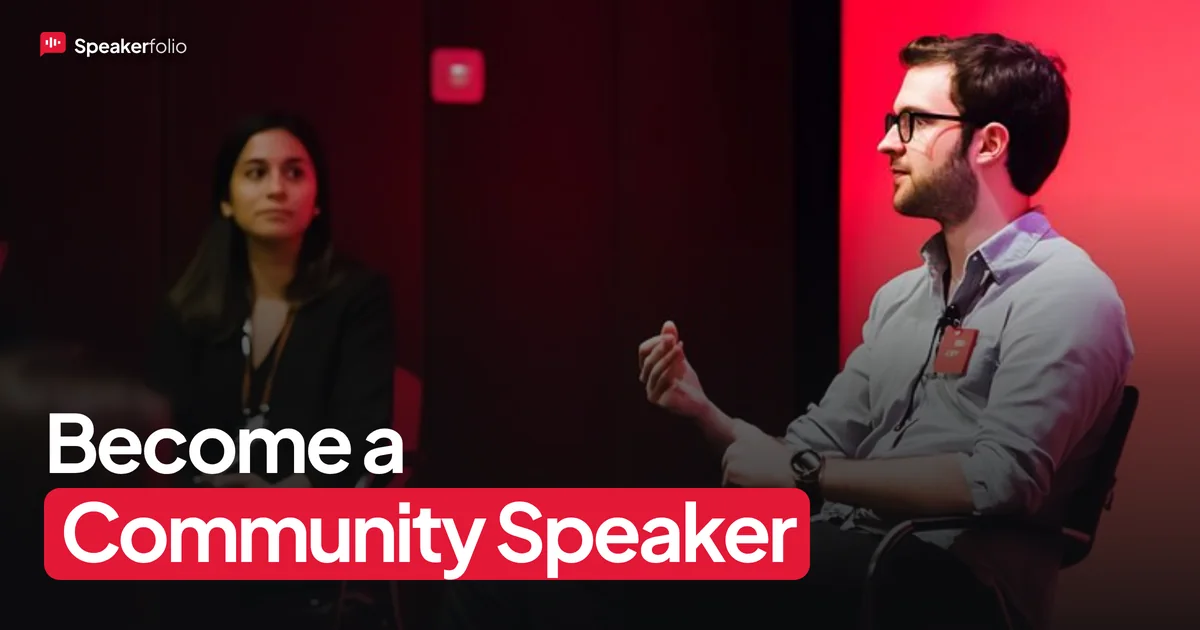
To become a community speaker, pick a cause or topic your community cares about, prepare one clear talk on it, and start speaking at local groups such as libraries, schools, nonprofits, service clubs and neighbourhood associations. Say yes to panels and small events, build relationships with local organisers, and collect testimonials and video as you go. When people start asking how to book you, a speaker website and a profile in the Speakerfolio speaker directory make it easy for them to find you.
Key takeaways
- Community speakers are known locally for a cause, skill or experience, not for fame.
- Start with the groups you already belong to, then widen to libraries, schools, clubs and nonprofits.
- Have two formats ready: a 20 to 30 minute talk and a shorter version for panels and events.
- Relationships drive bookings. One good talk often leads to three more invitations.
What is a community speaker?
A community speaker gives talks to local audiences about issues, skills or experiences that matter to the people around them. They speak at town halls, libraries, schools, places of worship, nonprofit events, business groups, festivals and panel discussions.
Community speakers are often:
- Nonprofit leaders and volunteers sharing a cause
- Health, safety or education professionals giving practical advice
- Local business owners talking about entrepreneurship
- People with lived experience, such as recovery, immigration, caregiving or overcoming hardship
- Youth workers, coaches and mentors
- Faith leaders speaking beyond their own congregation
- Activists and organisers working on local issues
Community speaker vs other speakers
| Community speaker | Keynote speaker | Motivational speaker | |
|---|---|---|---|
| Main audience | Local groups and organisations | Conferences and companies | Schools, teams, companies |
| Typical setting | Libraries, clubs, nonprofits, panels | Large events and conferences | Assemblies, kick-offs, events |
| Main goal | Inform, connect and mobilise locally | Set the theme of an event | Inspire people to act |
| Typical fee | Often free to modest honorarium | Paid, often by experience | Paid, often by experience |
Many speakers do all three over time. Community speaking is often where they start. If inspiring people is your main goal, our guide on how to become a motivational speaker covers that path.
How to become a community speaker: 8 steps
Step 1: Choose your cause or topic
Start with what you know and care about. Ask yourself:
- What do people in my community come to me for advice about?
- What problem in my area am I trying to solve?
- What have I lived through that could help others?
Good community topics are specific and local: "How families in our county can access free mental health support" connects better than "mental health".
Step 2: Know who needs to hear it
Picture the people in the room. Are they parents, small business owners, seniors, teenagers, new residents, volunteers? Each group needs different examples and a different call to action. Write down two or three audiences and the groups they belong to.
Step 3: Prepare one talk and a short version
Build a core talk of 20 to 30 minutes with a simple shape:
- A local story that shows why the issue matters here
- The problem and who it affects
- What's working, including your own work or organisation
- What the audience can do, with one clear next step
Then cut a five-minute version you can use on panels, at events and when an organiser gives you "a few minutes at the start".
Step 4: Start with groups you already belong to
Your first audiences are often closer than you think: your workplace, your place of worship, your children's school, your gym, your volunteer group. Offer to speak at a meeting or lunch. These friendly rooms are where you'll practise and get your first testimonials.
Step 5: Find local stages
Once you've given a few talks, reach out further. Common places that book community speakers:
| Where | What they often want |
|---|---|
| Public libraries | Free workshops and talks for residents |
| Schools and colleges | Career talks, assemblies, parent evenings |
| Rotary, Lions and service clubs | 20 to 30 minute lunch or breakfast talks |
| Chambers of commerce | Business, leadership and local economy topics |
| Nonprofits and charities | Fundraisers, volunteer events, awareness days |
| Places of worship | Community issues, family, outreach |
| Neighbourhood associations | Safety, local services, civic issues |
| Local festivals and fairs | Panels, short talks and demos |
| Local podcasts and radio | Interviews on community topics |
Find the programme chair or events coordinator, and send a short email with your topic, who it helps and a link to your website or speaker profile.
Step 6: Say yes to panels and Q&As
Panels are one of the easiest ways into community speaking. You share the stage, the pressure is lower and organisers often need more voices. Prepare two or three short points you want to make and a story you can tell in under a minute. If nerves hold you back, our guide on building confidence in public speaking can help.
Step 7: Build relationships, not just bookings
Community speaking runs on trust and word of mouth. After each event:
- Thank the organiser in writing
- Ask for a short testimonial
- Ask who else they know who might want the talk
- Stay in touch with useful updates, not just requests
- Show up to other community events, even when you're not speaking
One talk at a Rotary club can lead to invitations from members' businesses, schools and charities.
Step 8: Make yourself easy to find
As word spreads, people will search for you. Organisers want to see what you speak about, a short video and how to reach you. A simple speaker website brings it together: your topics, your story, testimonials, upcoming events and a contact form. It also helps people find you on Google and through AI assistants when they search for local speakers on your topic.
Do community speakers get paid?
Sometimes. Many community talks are free or come with a small honorarium, especially for nonprofits, libraries and schools. As you build a reputation, you can:
- Ask for an honorarium from organisations with event budgets
- Charge businesses and conferences a speaking fee
- Seek sponsorship from local businesses for a talk series
- Apply for community or arts grants that fund public programmes
- Offer paid workshops alongside free talks
Being clear about what you charge and when you speak for free makes it easier for organisers to say yes.
Mistakes new community speakers make
- Choosing a topic so broad that it doesn't feel local
- Talking about the problem without giving the audience something to do
- Only speaking where they're already known
- Not asking for testimonials or referrals after a talk
- Turning up without a short version when the schedule runs late
- Having no website or profile, so organisers can't share their details
How Speakerfolio helps community speakers
Speakerfolio builds websites for speakers, trainers and coaches. You send your LinkedIn profile, and we write and build a free one-page speaker website for you, with your story, topics, testimonials, upcoming events and a contact form, on yourname.speakerfolio.com.
You're also listed in the Speakerfolio speaker directory, where organisers search for speakers by topic. Our Spotlight template is designed for faith and community speakers, with sections for messages, upcoming gatherings and invite options. When you want your own domain and a custom design, Premium is $100 a year with hosting and updates included.
Frequently asked questions
What does a community speaker do?
A community speaker gives talks to local audiences about issues, skills or experiences that matter to them, at places like libraries, schools, nonprofits, service clubs, places of worship and community events.
How do I start speaking in my community?
Choose one topic you know well, prepare a 20 to 30 minute talk and a short version, and offer to speak at groups you already belong to. Then contact libraries, schools, service clubs and nonprofits in your area.
Do I need experience to become a community speaker?
No. Many community speakers start with lived experience or local knowledge rather than speaking experience. Friendly local groups are a good place to practise.
Where can I find community speaking opportunities?
Public libraries, schools, Rotary and Lions clubs, chambers of commerce, nonprofits, places of worship, neighbourhood associations, local festivals and local podcasts all invite community speakers.
Do community speakers get paid?
Many community talks are free or include a small honorarium. Speakers often charge businesses and conferences, use sponsorships or grants for talk series, and offer paid workshops.
How do I contact organisations to speak?
Find the programme chair or events coordinator and send a short email with your topic, who it helps, the format and length, and a link to your website or speaker profile.
How do I become a better community speaker?
Speak often, record your talks, ask for feedback, and adapt each talk to the specific audience. Keep stories local and always give people a clear next step.
Start speaking where you live
Becoming a community speaker starts with one topic you care about and one room that needs to hear it. Speak to the groups you know, build relationships with local organisers and make it easy for them to find you. Get your free speaker website from Speakerfolio and join the speaker directory.

Saleh is a UI/UX and web designer with more than five years of experience and the founder of Speakerfolio, where he builds websites that help speakers get booked. He specialises in conversion-focused design and on-page SEO.
Connect on LinkedInRelated articles
All articles